A Head of Design, in your Figma file.

For founders and small product teams. Direkta plans, designs, audits and fixes in your own Figma file, explains every decision, and never touches your originals.

Someone types direkta design. Direkta offers three looks with a recommendation, then designs ten screens, including a declined card, going offline and a closed quote, each with a short note.

Real output from Fieldnote, a made-up app we use for demonstrations. Also on every plan: concept, redesign, add a feature, copy, dark mode, other screen sizes, right to left and system upkeep.

One project, start to finish.

Fieldnote is a made-up app for freelance photographers: send a quote, take a deposit, deliver the pictures. We ran nine Direkta commands on it in one Figma file. Every picture here is the real output. Click any of them to see it larger.

A plan before a single screen.

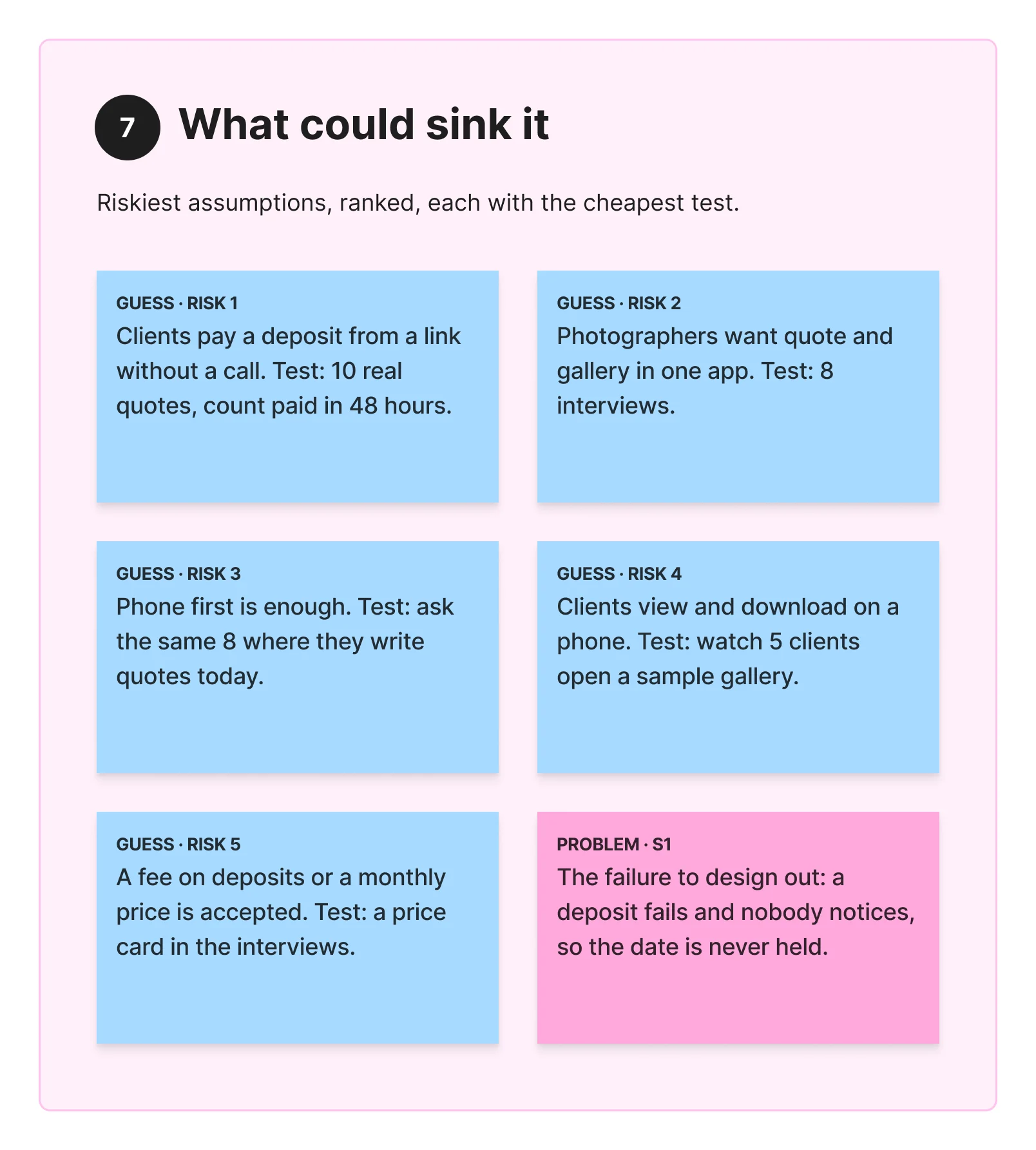
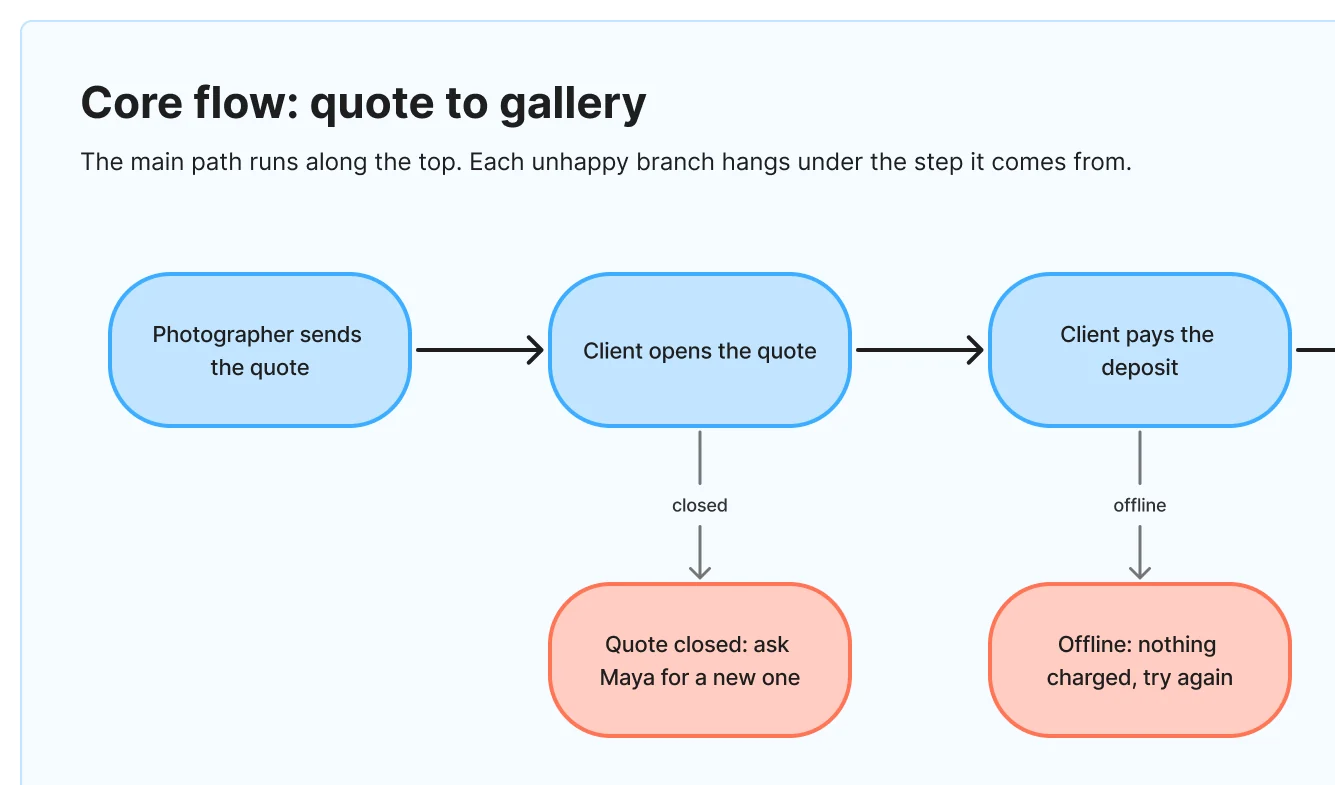
From a one-line idea, Direkta set out what is known, what is a guess and what could sink the product, each with a cheap test. The core flow hangs every unhappy path under the step it comes from.

  • 8plan sections
  • 5ranked risks
Plan board, the start of the core flow
The start of the core flow: photographer sends the quote, client opens the quote, client pays the deposit. Under them hang the unhappy paths: quote closed, ask Maya for a new one; offline, nothing charged, try again.

Three looks, one clear pick.

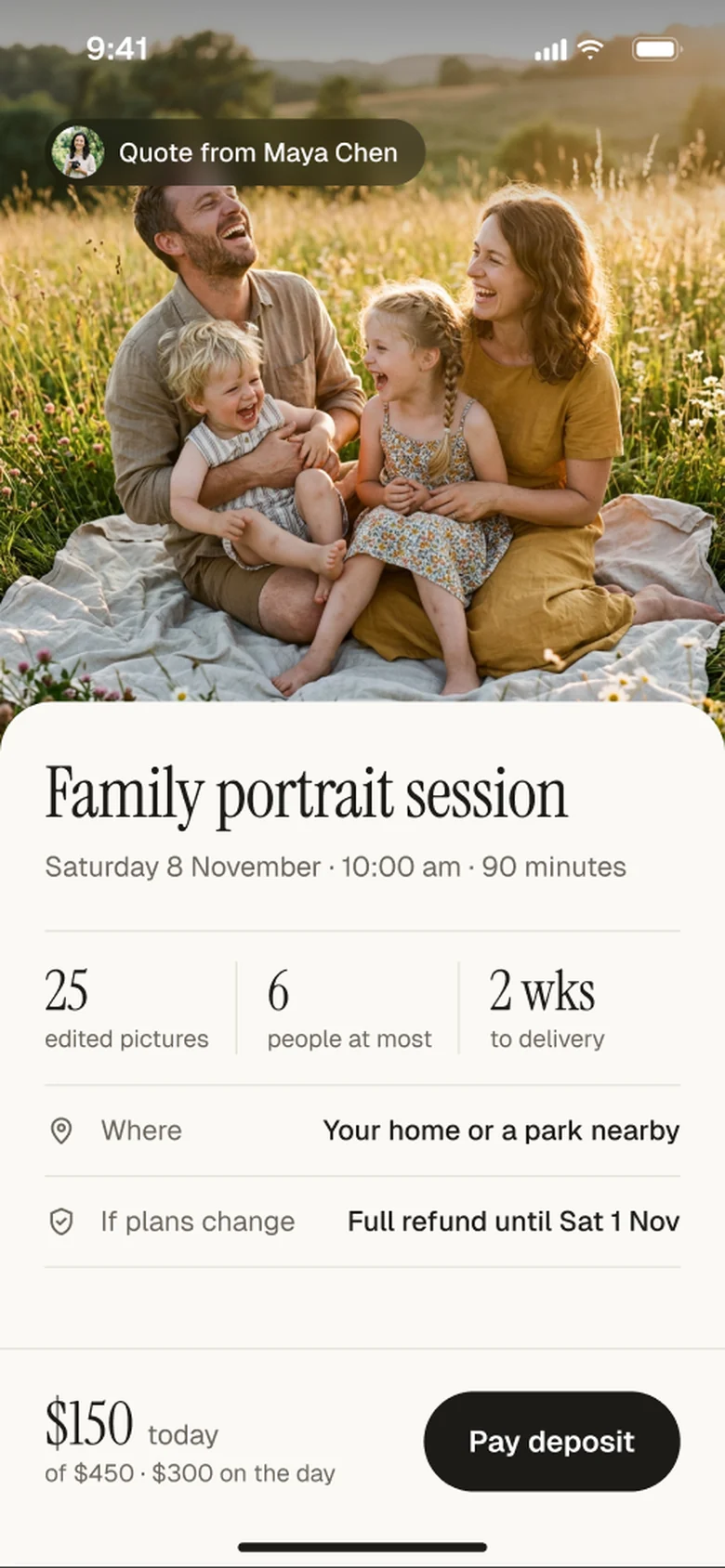
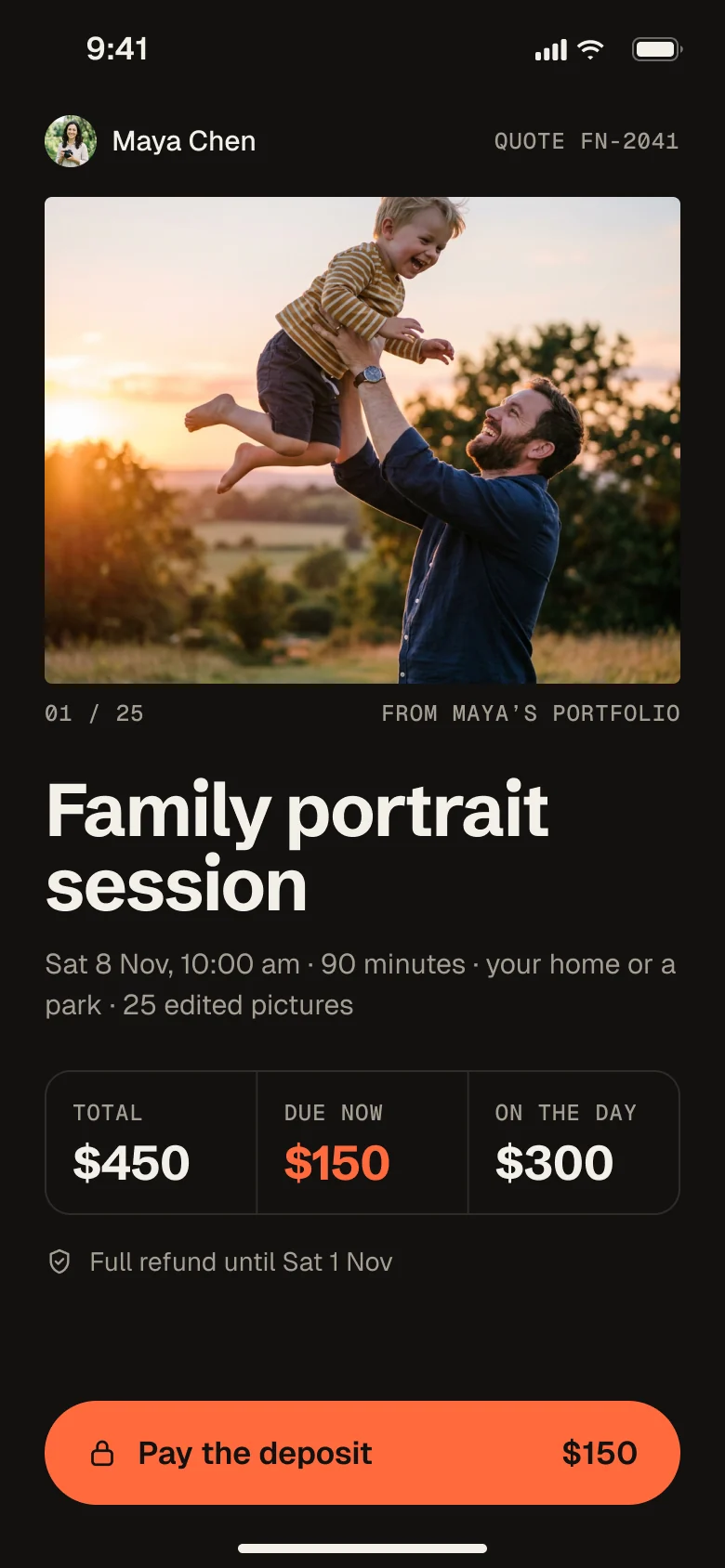
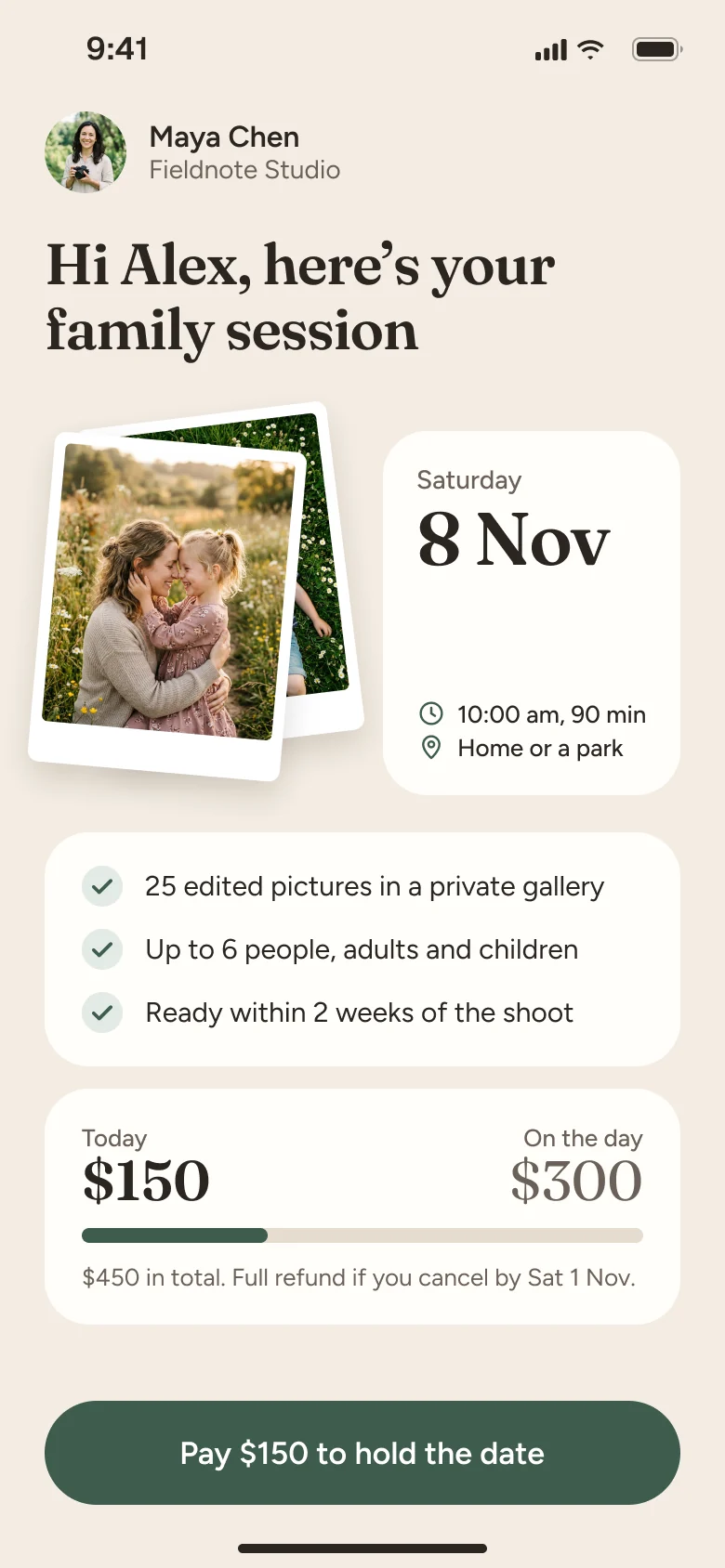
Studio journal, Darkroom and Keepsake, each on the same screens with its trade-off in one line. Darkroom was chosen: the pictures glow on warm black and one safelight orange marks what to tap.

  • 3directions, shown on the same quote
Explorations page: Studio journal, Darkroom, Keepsake
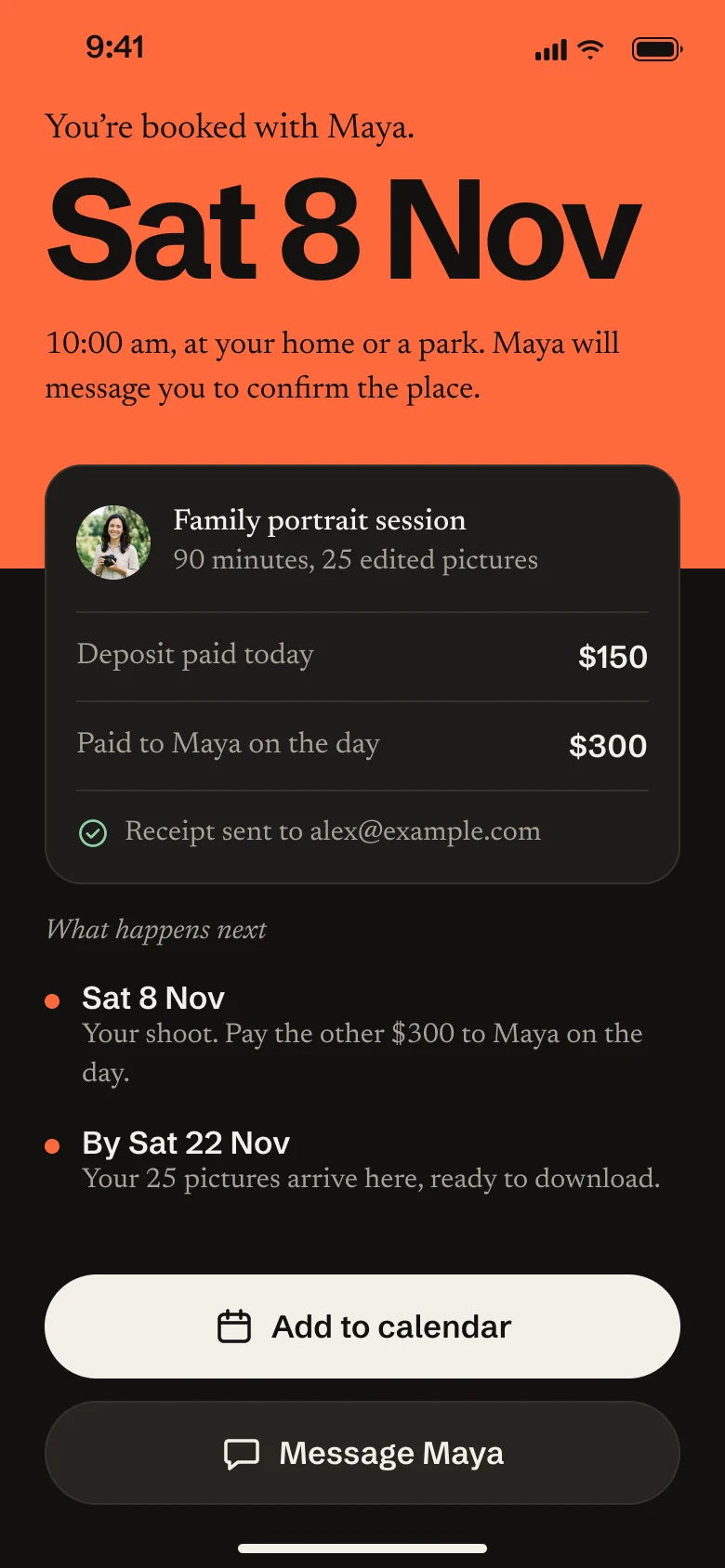
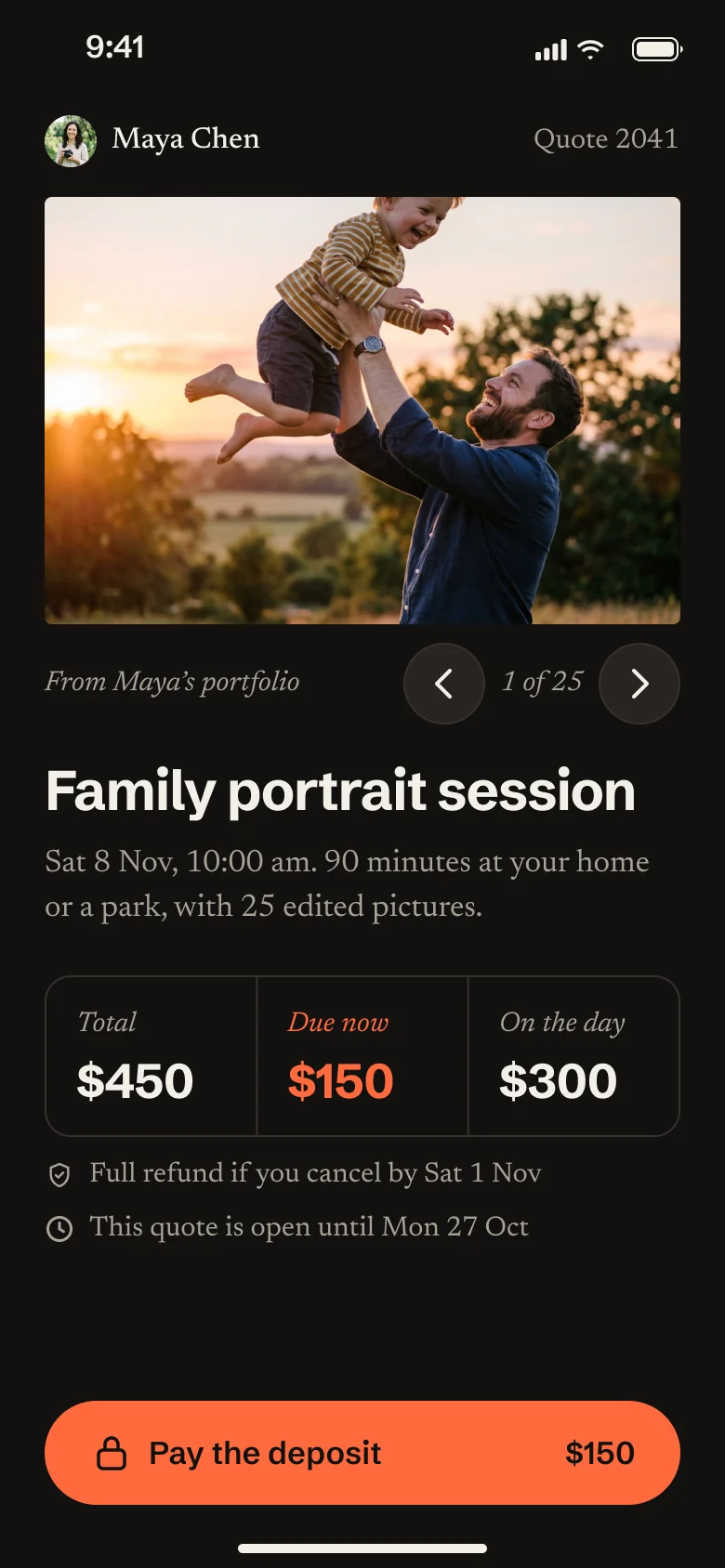
Direction A, Studio journal: a full-bleed family photo, an editorial serif title and a cream sheet with the details. Direction B, Darkroom: warm black, the photo on a dark page, and one orange button to pay the deposit. Direction C, Keepsake: a warm, personal quote with tilted prints, a date card and a green button.

Every screen, including the unhappy ones.

The quote, the deposit, the booking and the gallery, plus what happens when a quote has closed, the phone goes offline or the pictures are not ready yet. Each screen carries a short note: who it is for, what to watch out for, and what needs the owner's OK.

  • 10screens
  • 5unhappy states
Design page, three of the unhappy states
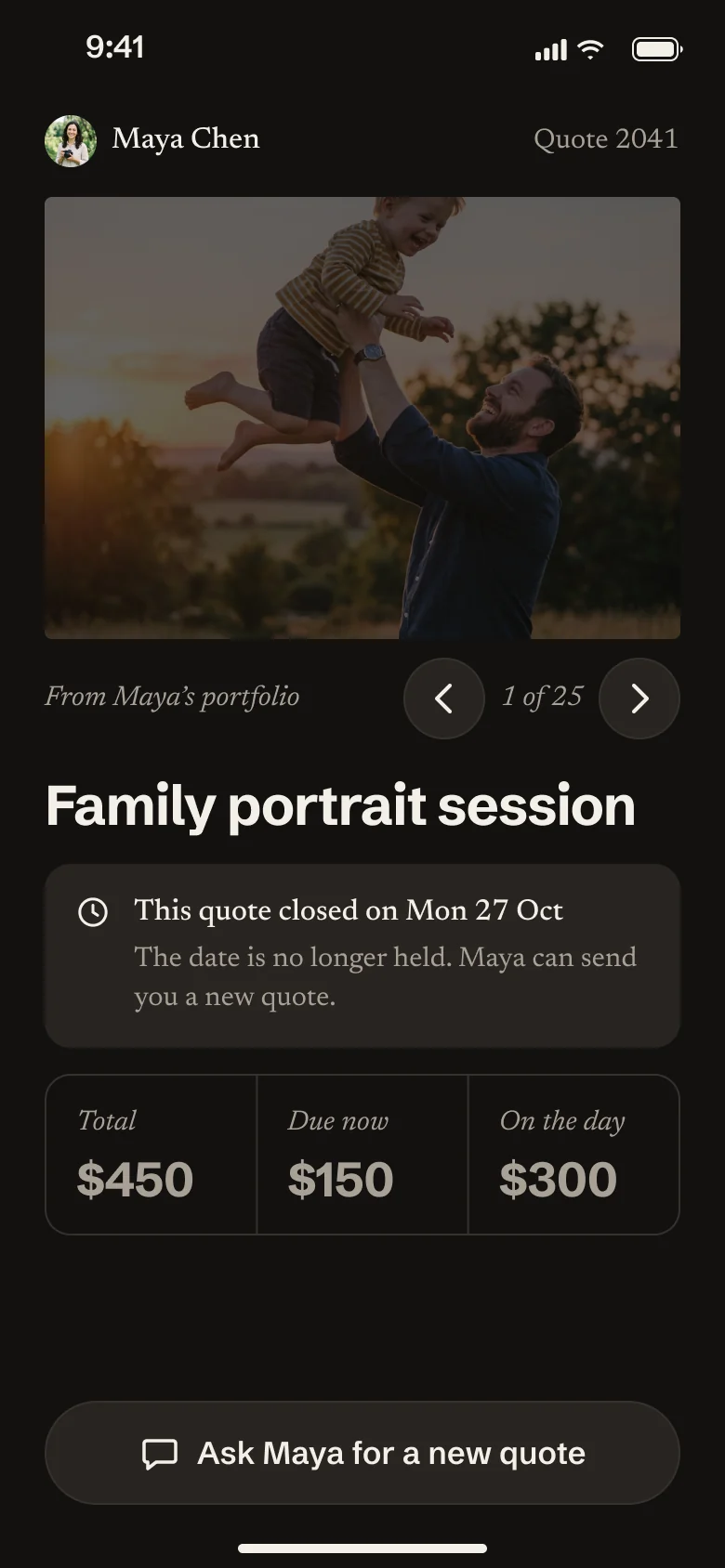
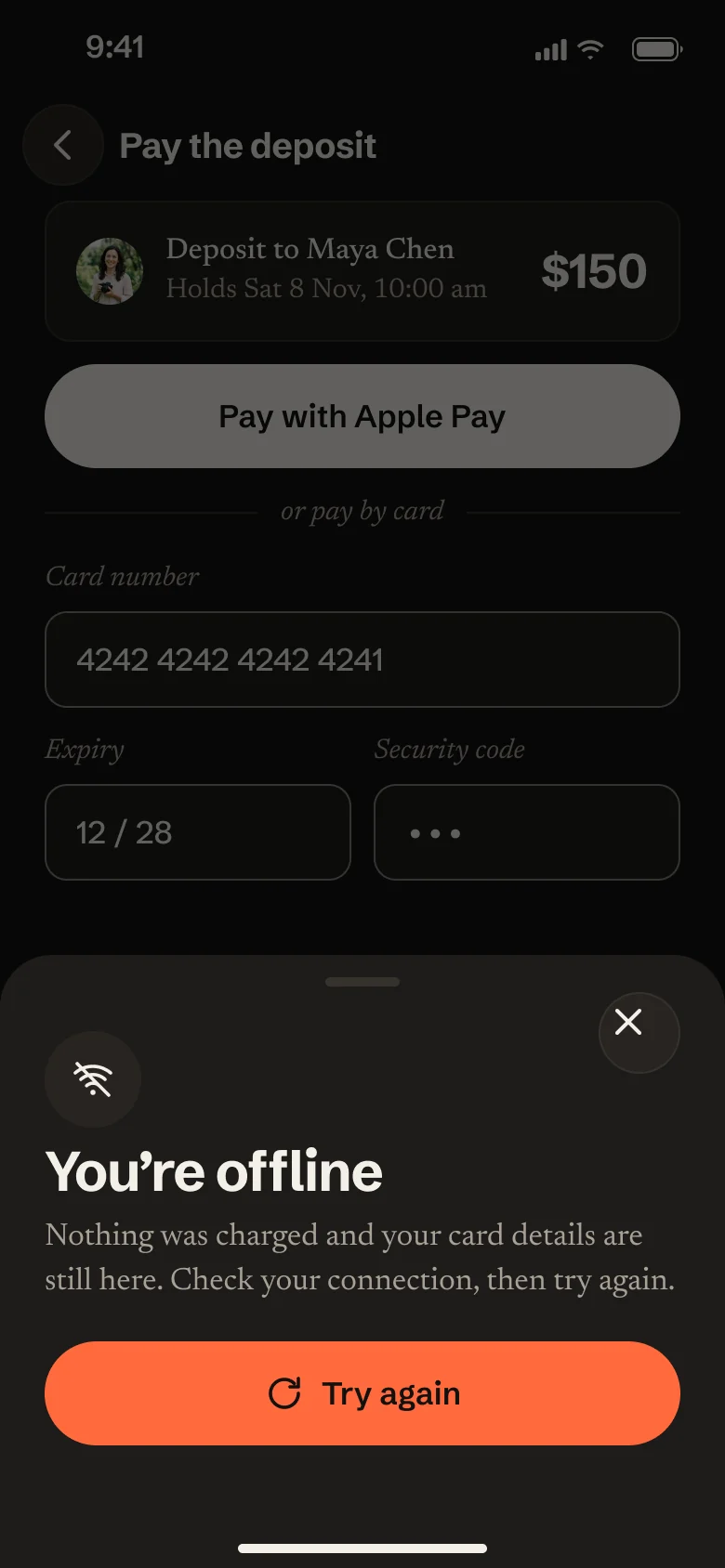
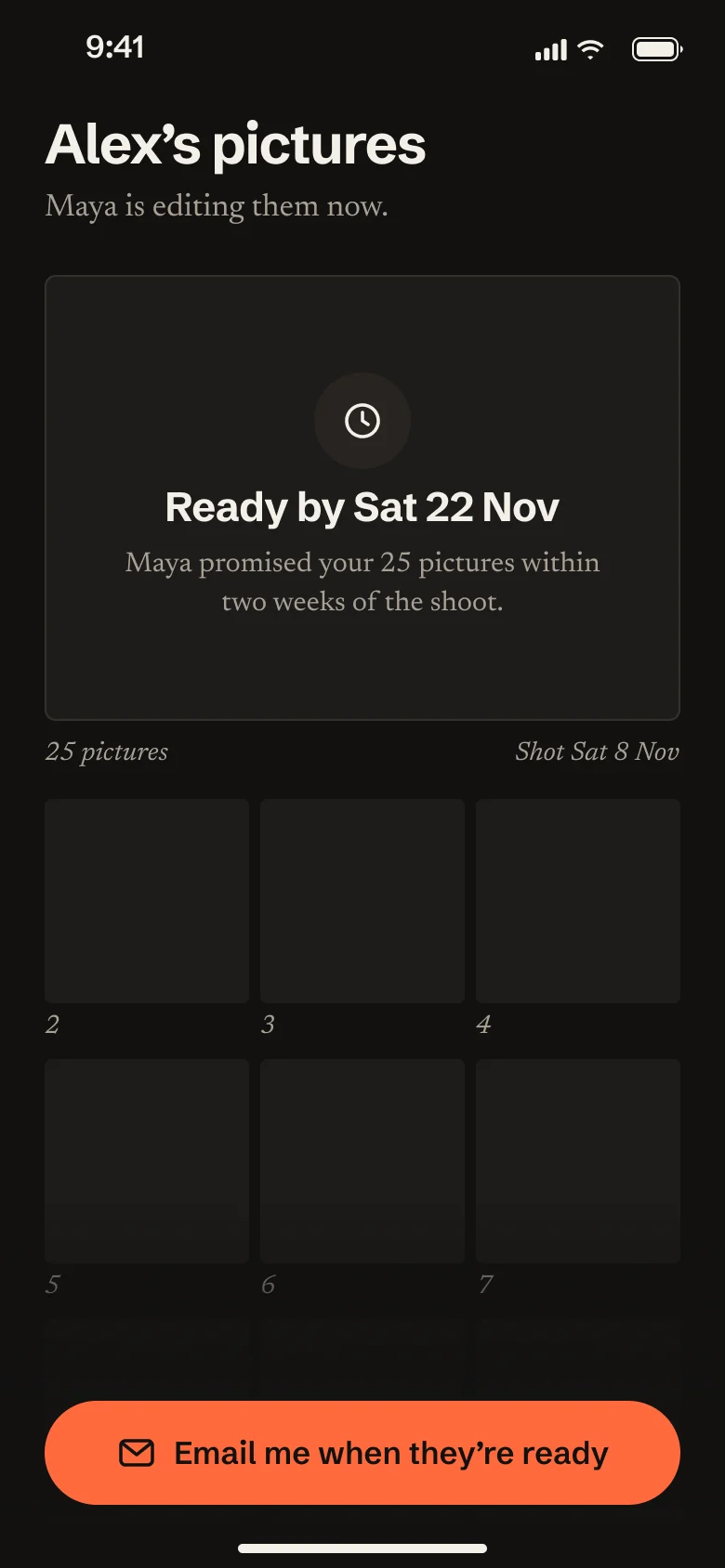
Quote closed: the photo is dimmed, a notice says the quote closed on Mon 27 Oct and the date is no longer held, and the button asks Maya for a new quote. Offline: a sheet over the payment form says nothing was charged and the card details are still there, with a Try again button. Pictures not ready yet: the gallery shows empty tiles and 'Ready by Sat 22 Nov', with a button to be emailed when they are ready.

A design system that comes with the screens.

Colours with a light and a dark theme, type, spacing and the ten components the screens use, each with its states: pressed, focus, disabled and loading.

  • 10components
  • 2themes
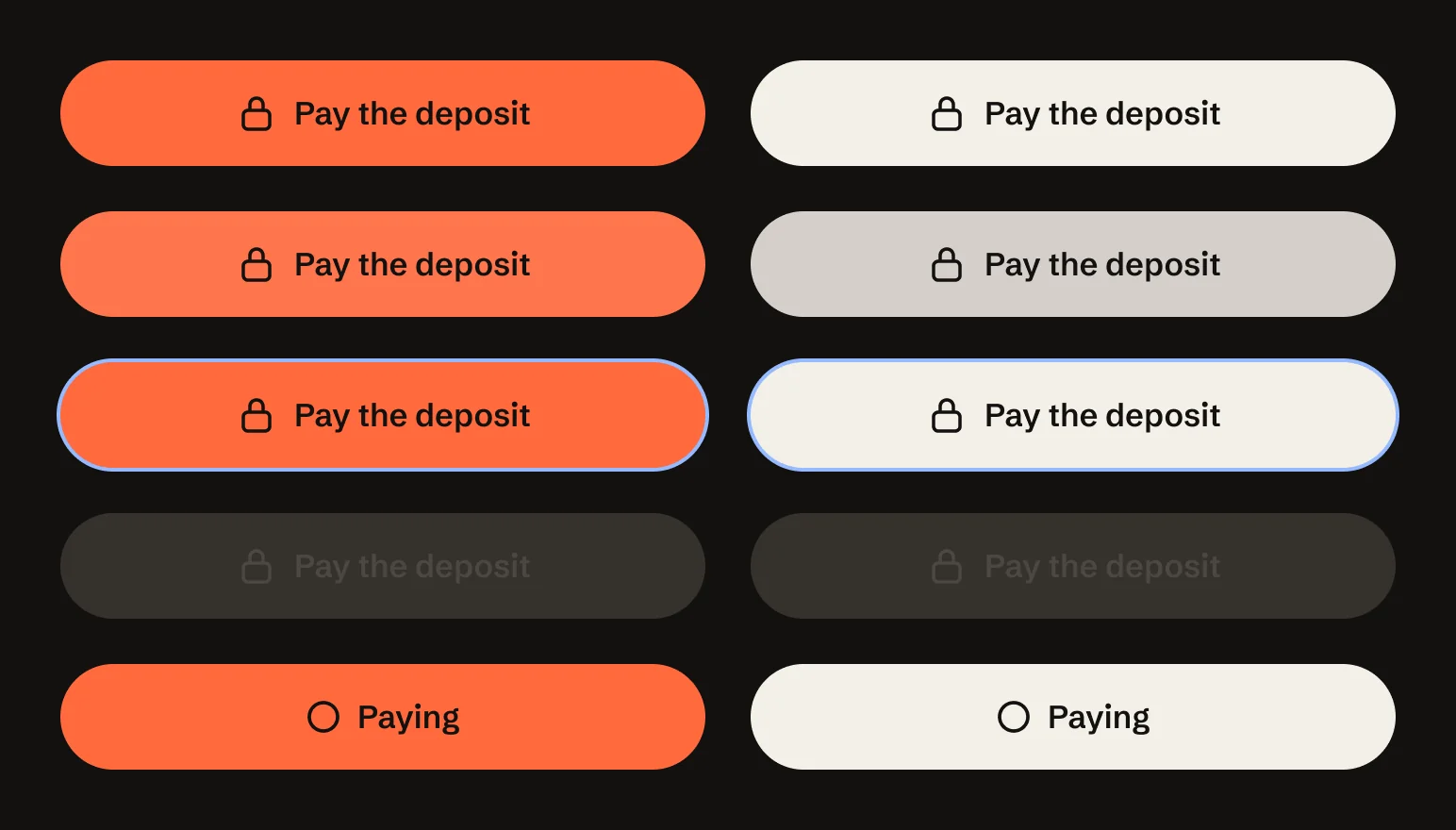
Components page, the button in each state
The orange main button and the cream second button, each shown default, pressed, with focus, disabled and loading.

An honest audit, even of its own work.

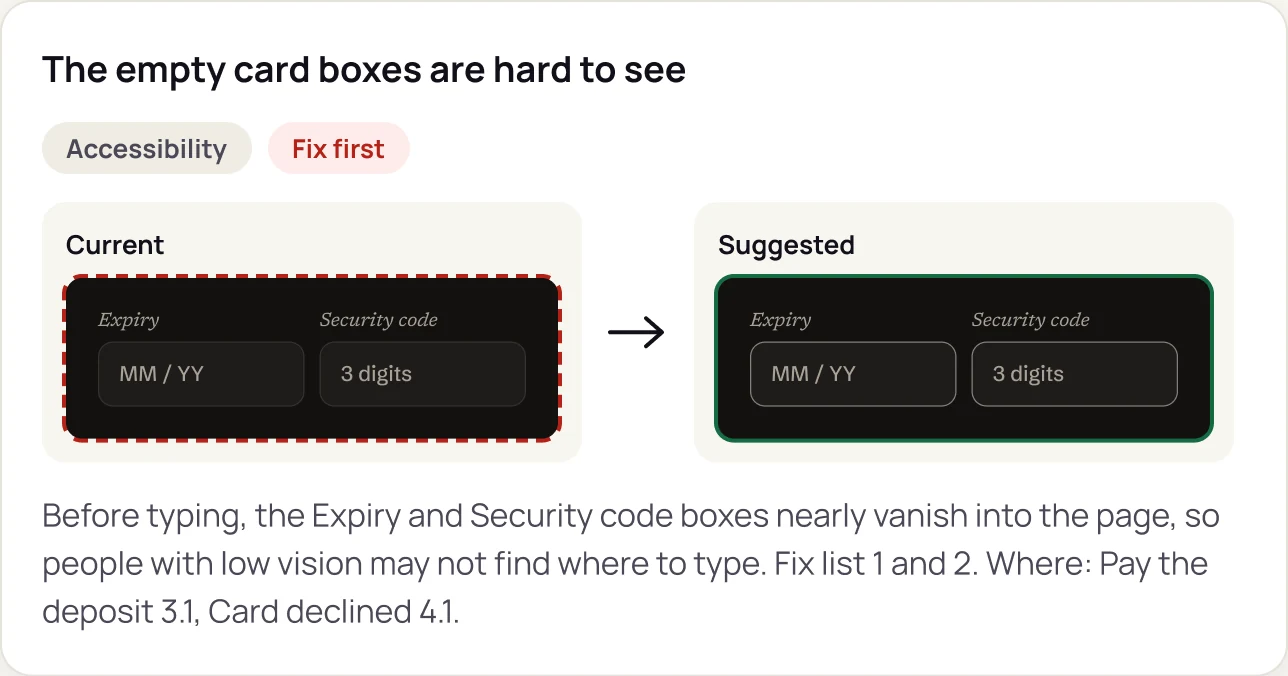
Direkta then audited the screens it had designed. It found 11 issues and ranked 3 to fix first. The worst: before typing, the empty card boxes nearly vanish into the page. Every count is a real check, not a score made up to look good.

  • 952checks run
  • 3to fix first
Audit page, the first thing to fix
Audit card 'The empty card boxes are hard to see', marked Accessibility and Fix first, with the current faint boxes beside the suggested ones and a plain explanation of who it affects.

Fixed at the root, then checked again.

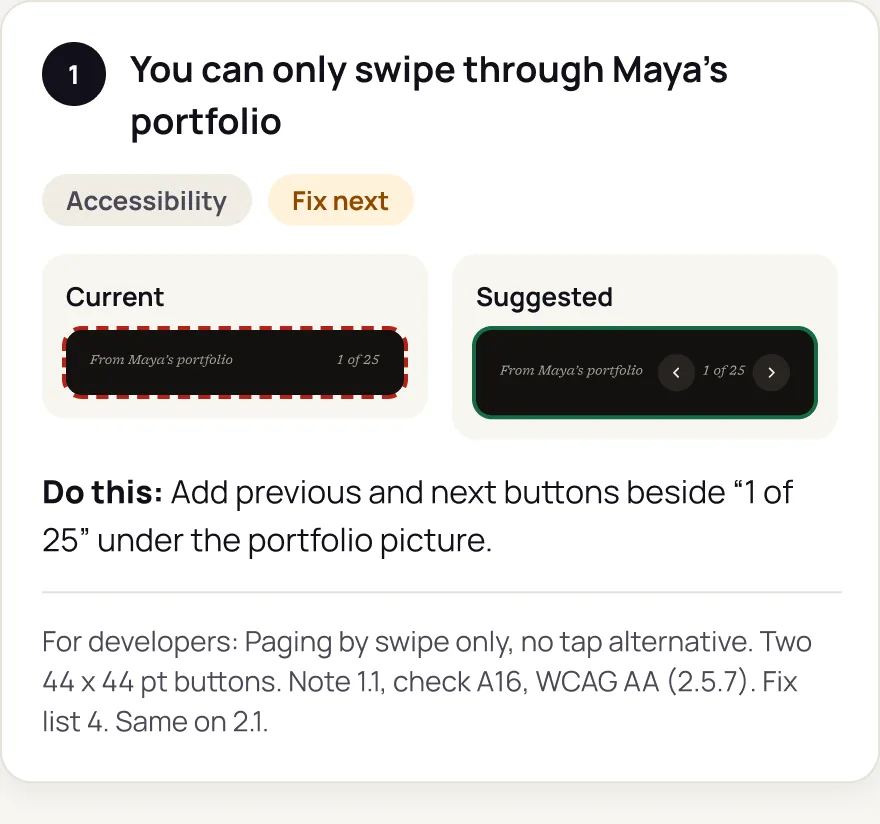
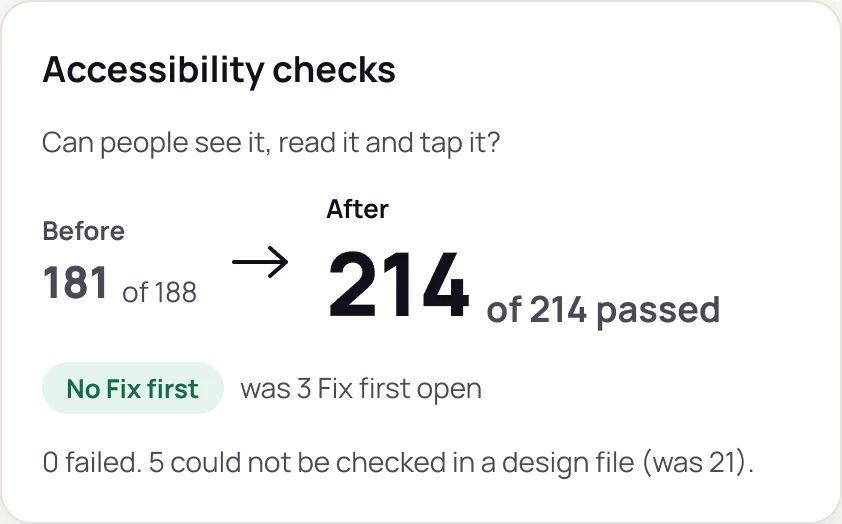
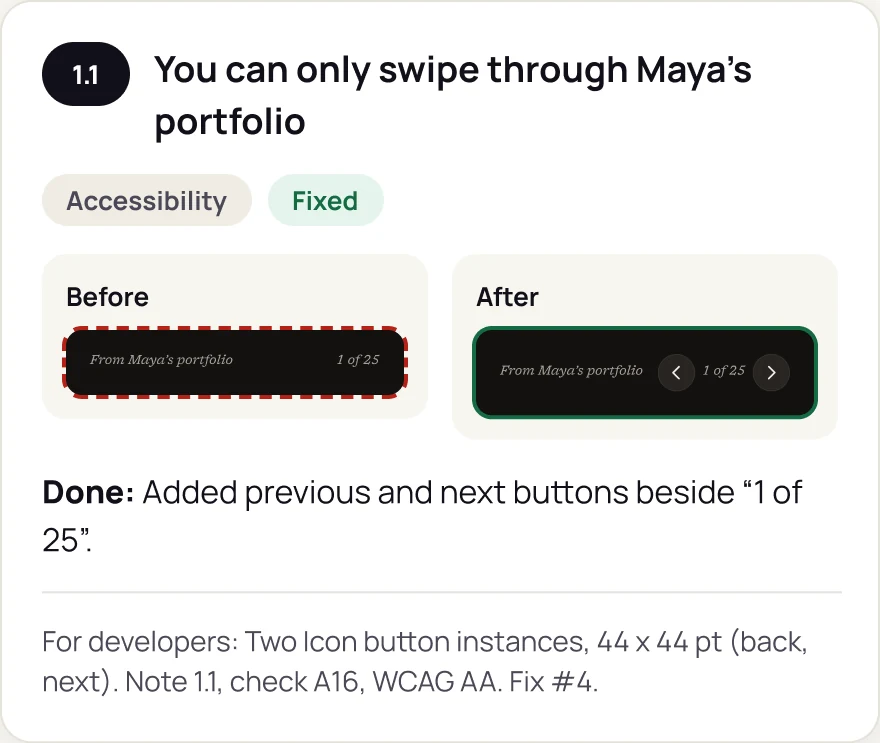
One new border colour fixed every empty field at once, and the portfolio got previous and next buttons. The screens were rebuilt on copies, every check ran again, and each fix got a before and after. The one issue left open is listed, with the reason.

  • 10 of 11issues fixed
  • 214 of 214accessibility checks
Fixed page, a fix note with before and after
Fix note 1.1 'You can only swipe through Maya's portfolio', marked Fixed: before, the pager has no buttons; after, previous and next buttons sit beside '1 of 25'.

A second theme, switched by tokens.

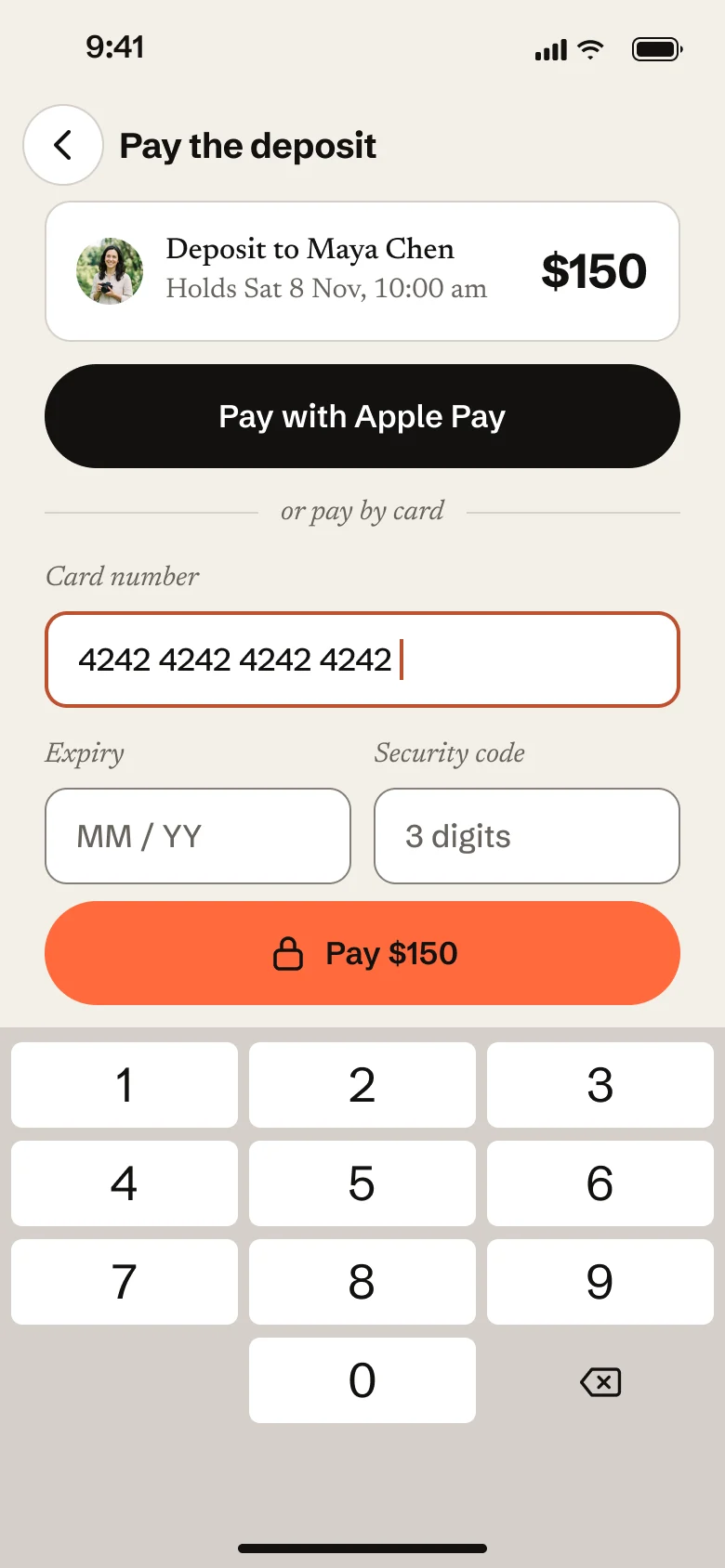
The light version is the same ten screens with the theme switched, not recoloured by hand. Every text colour was checked against its background in the new theme.

  • 13 of 13text pairs pass
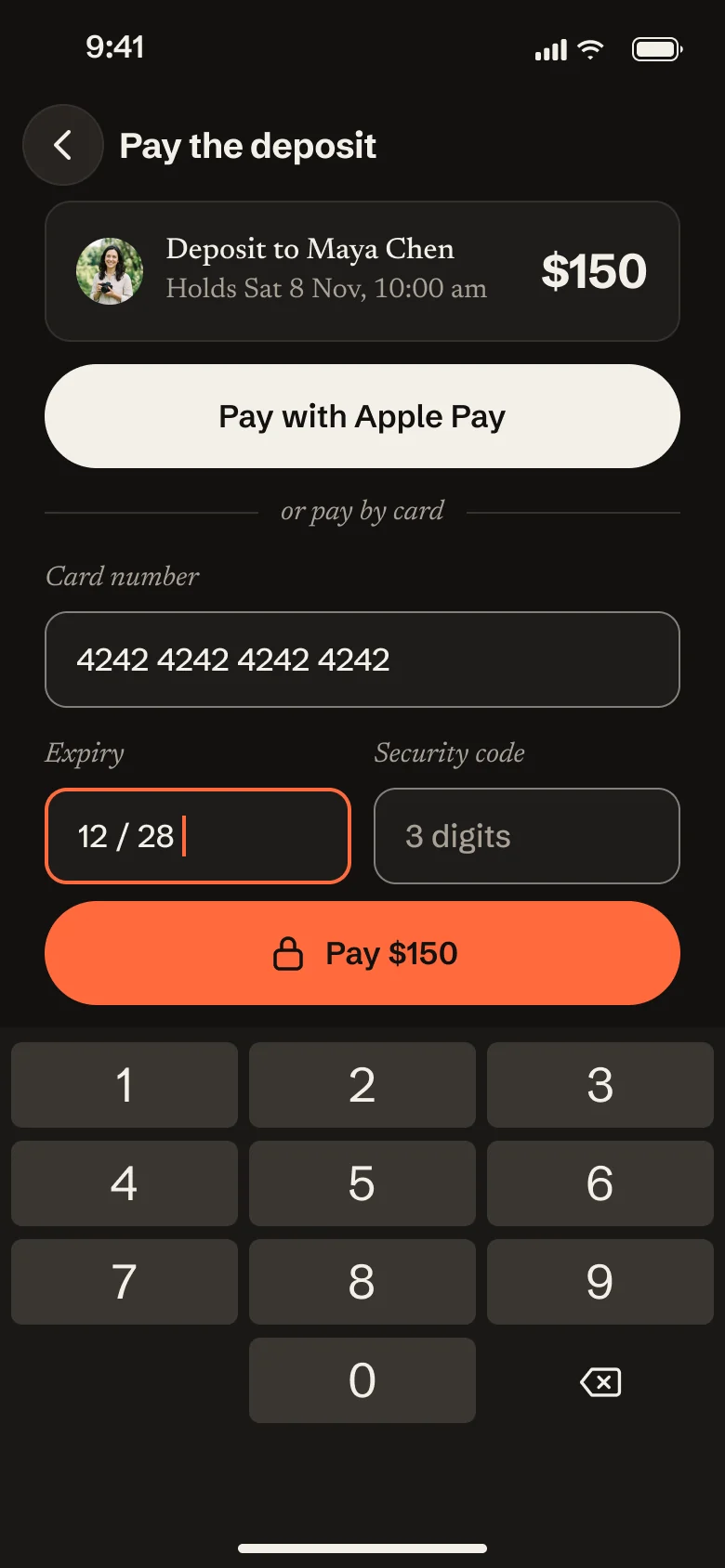
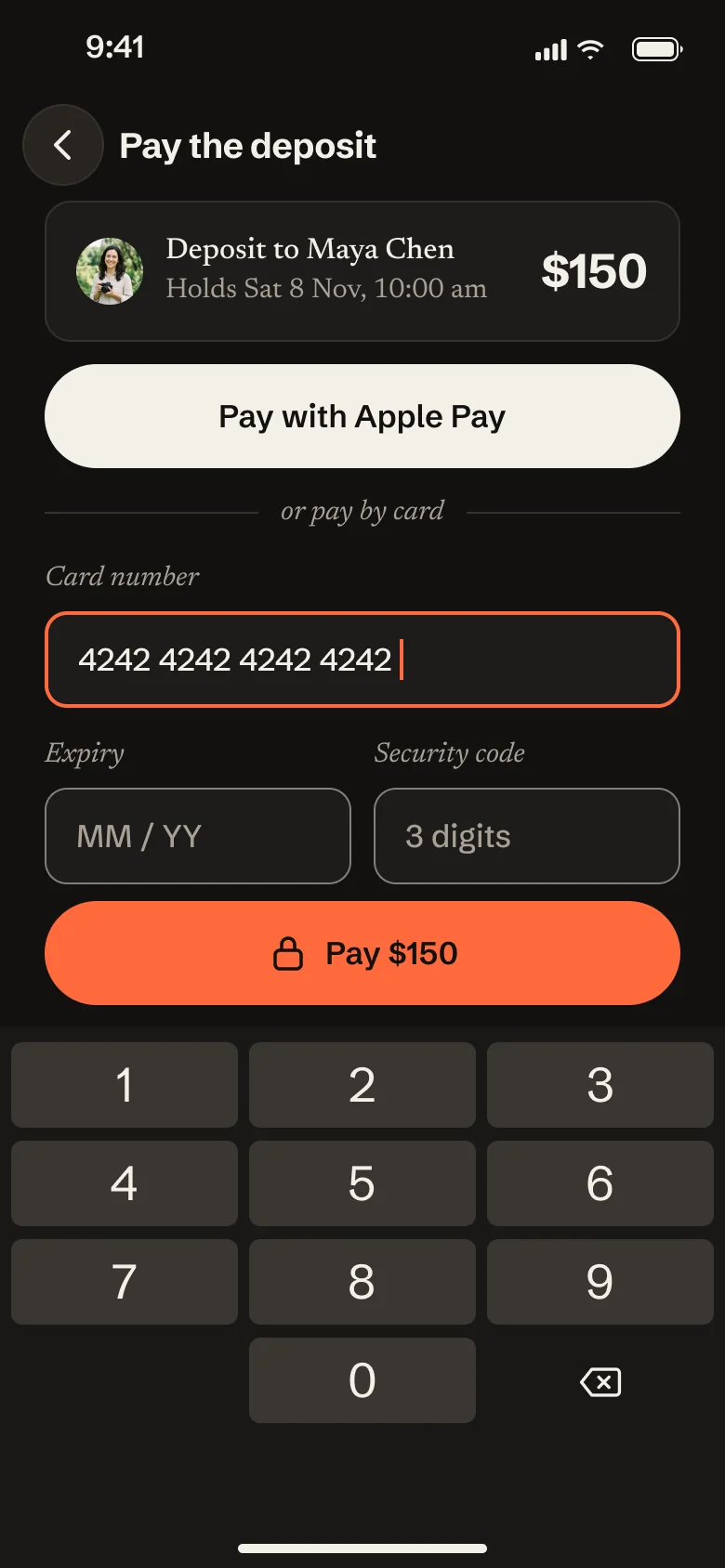
Pay the deposit, dark and light
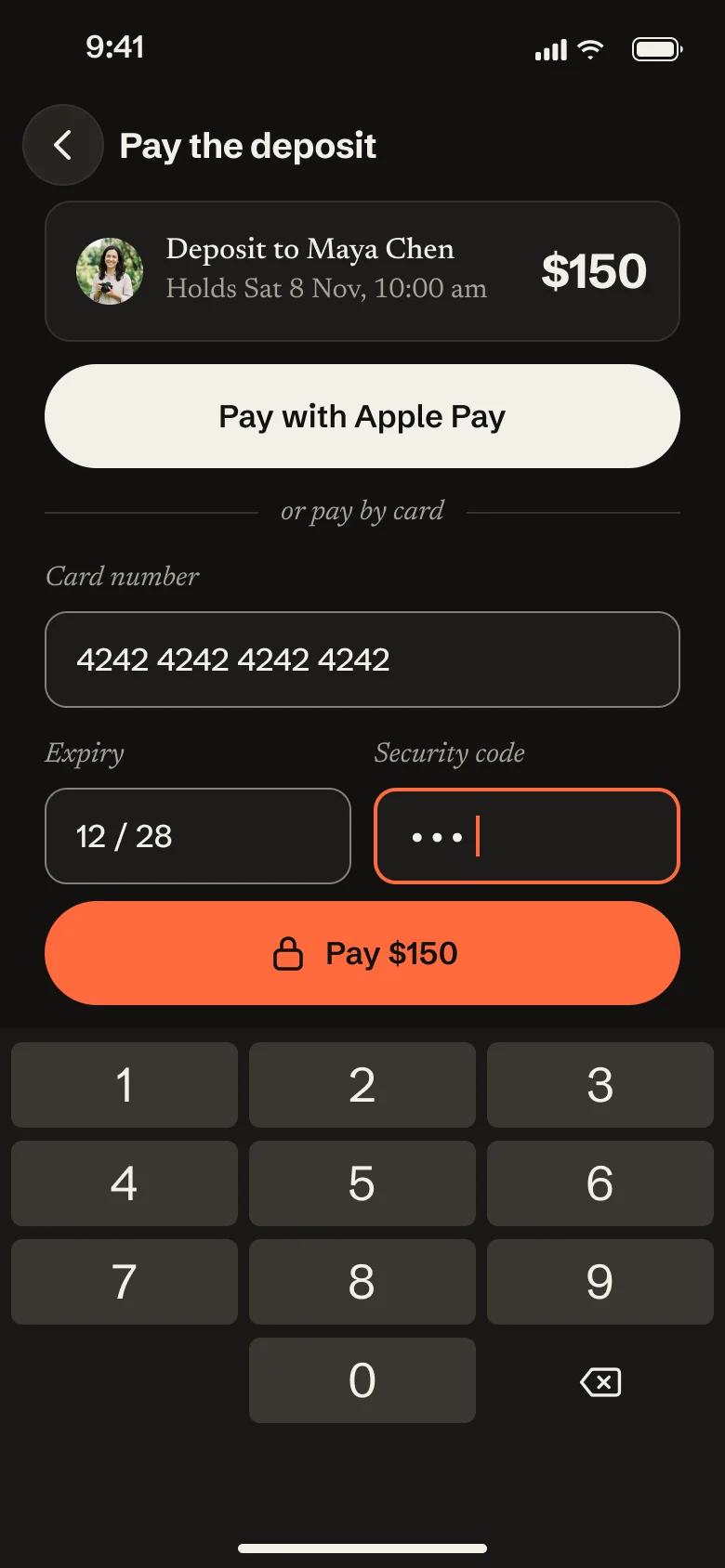
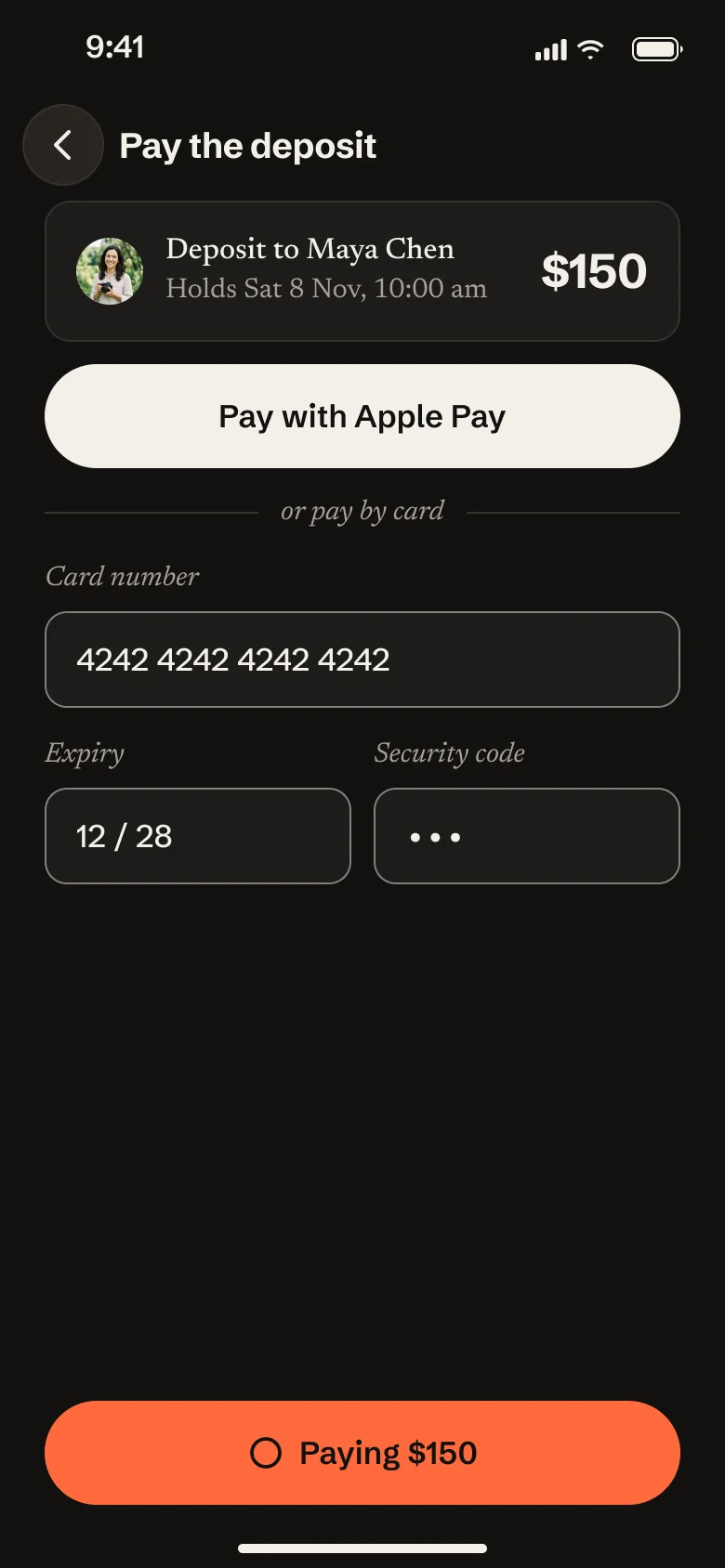
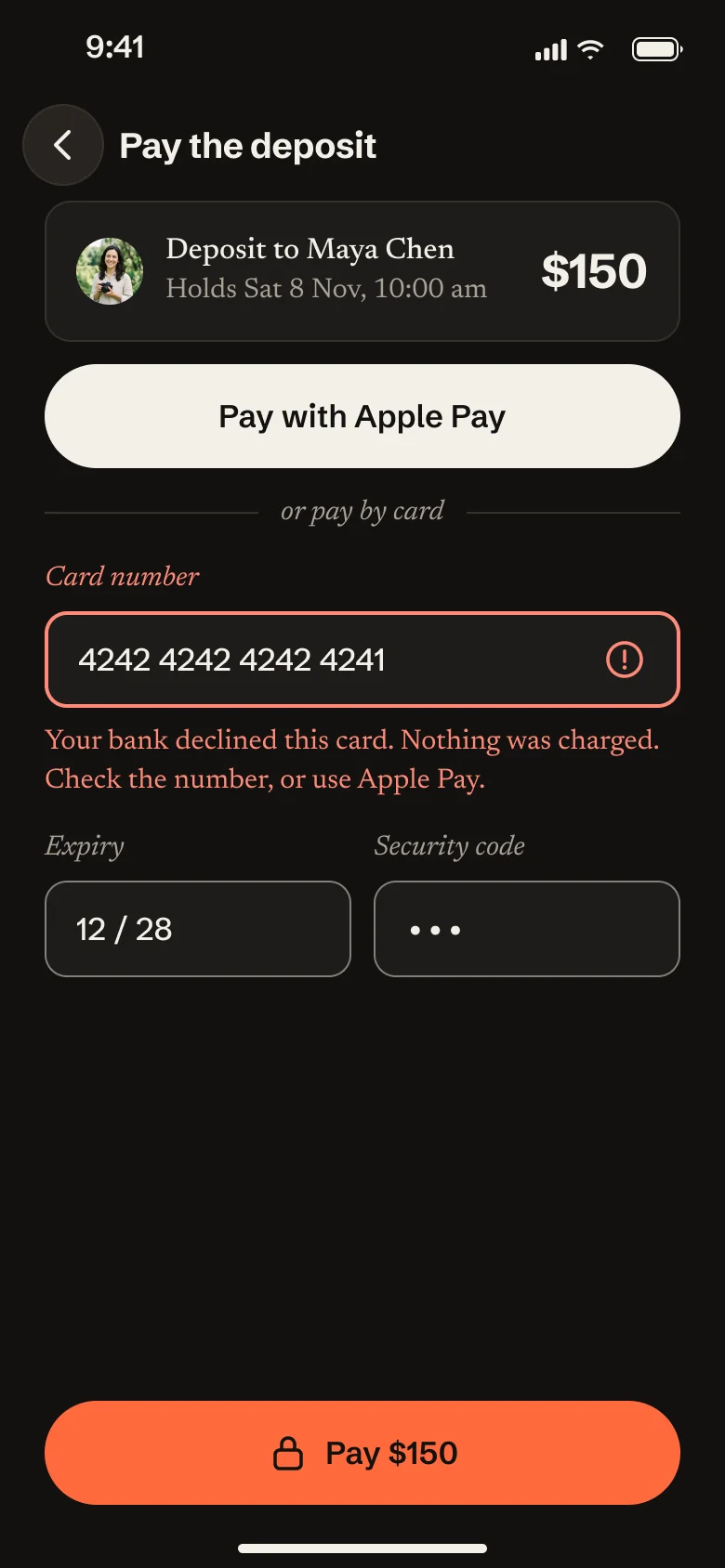
The payment screen in the dark theme, with Apple Pay, the card fields and the orange Pay $150 button. The same payment screen in the light theme, on a warm off-white background.

Tablet and desktop, adapted.

Clients open Fieldnote links in a browser, so the key screens got tablet and desktop layouts. The gallery becomes a large picture with a grid beside it, and download moves to the top.

  • 4key screens
  • 3sizes each
Other sizes page, the gallery at 1440
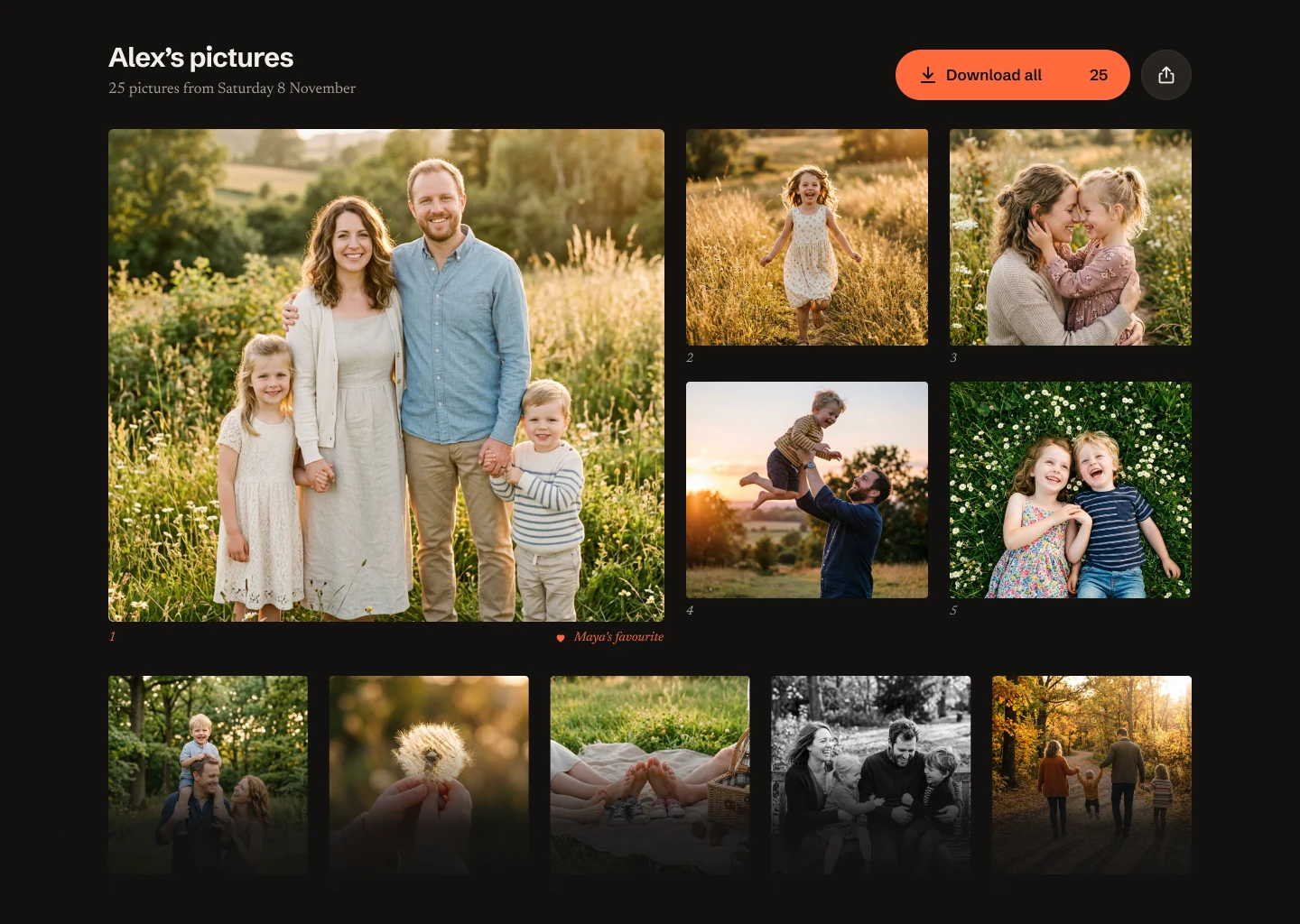
The gallery at desktop width: a large favourite picture, four pictures beside it and a row of five below, with Download all at the top right.

A prototype you can play.

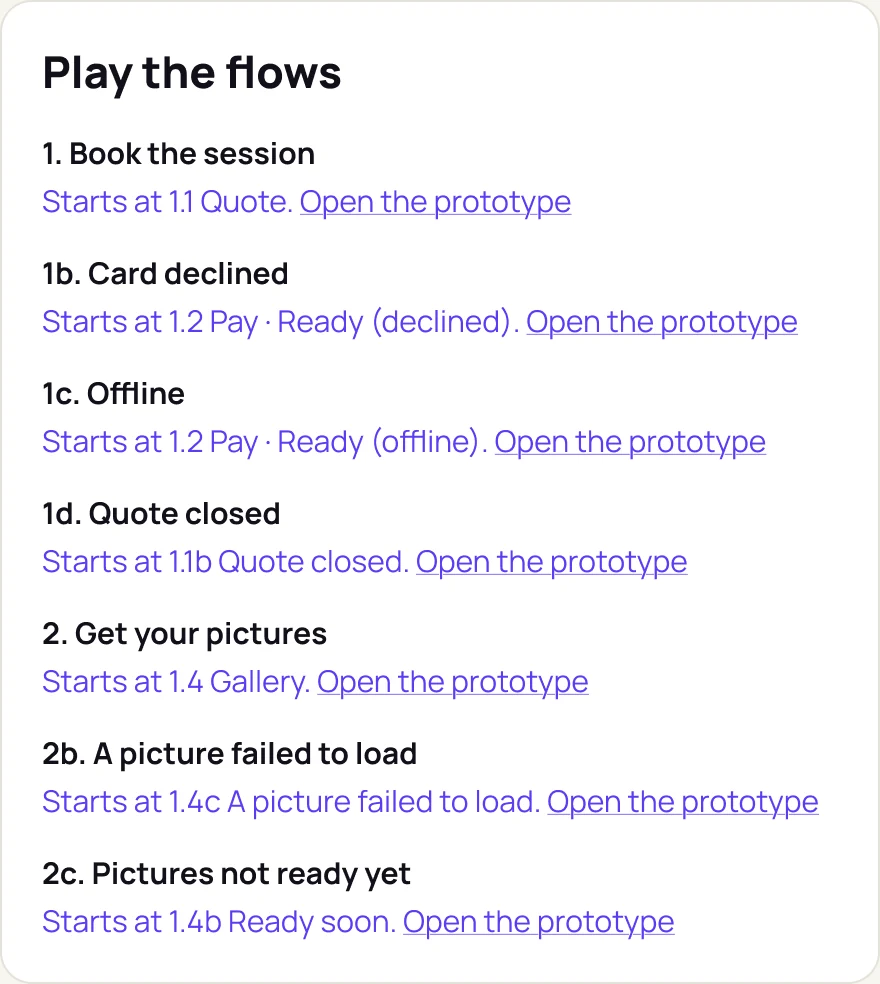
Seven flows on a copy of the screens: booking, a declined card, going offline, a closed quote and the gallery. The in-between states were built so typing and paying feel real.

  • 7flows
  • 0dead ends
Prototype page, the flows to play
Panel 'Play the flows': book the session, card declined, offline, quote closed, get your pictures, a picture failed to load and pictures not ready yet, each with where it starts and a link to open the prototype.

Ready for developers.

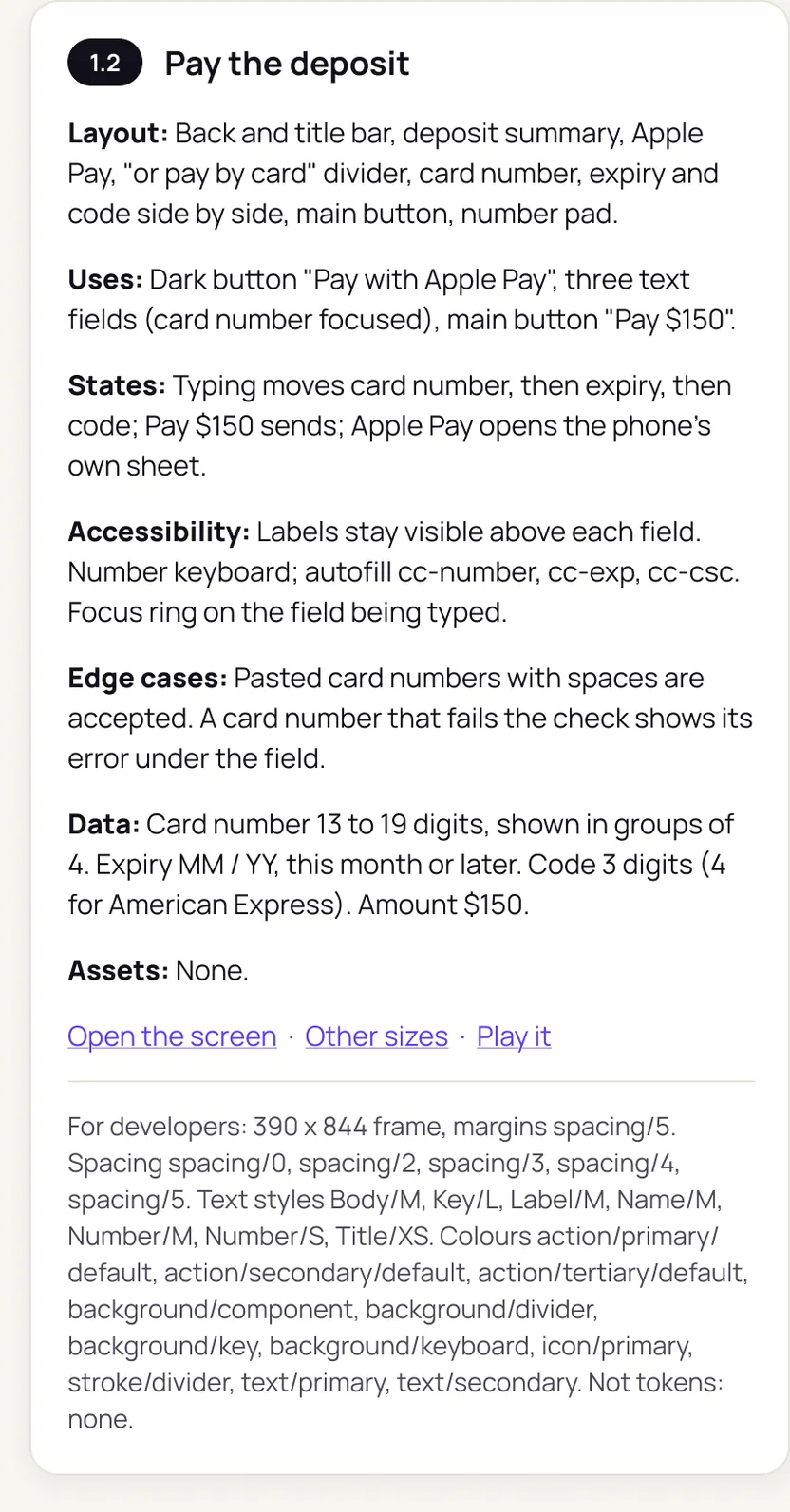
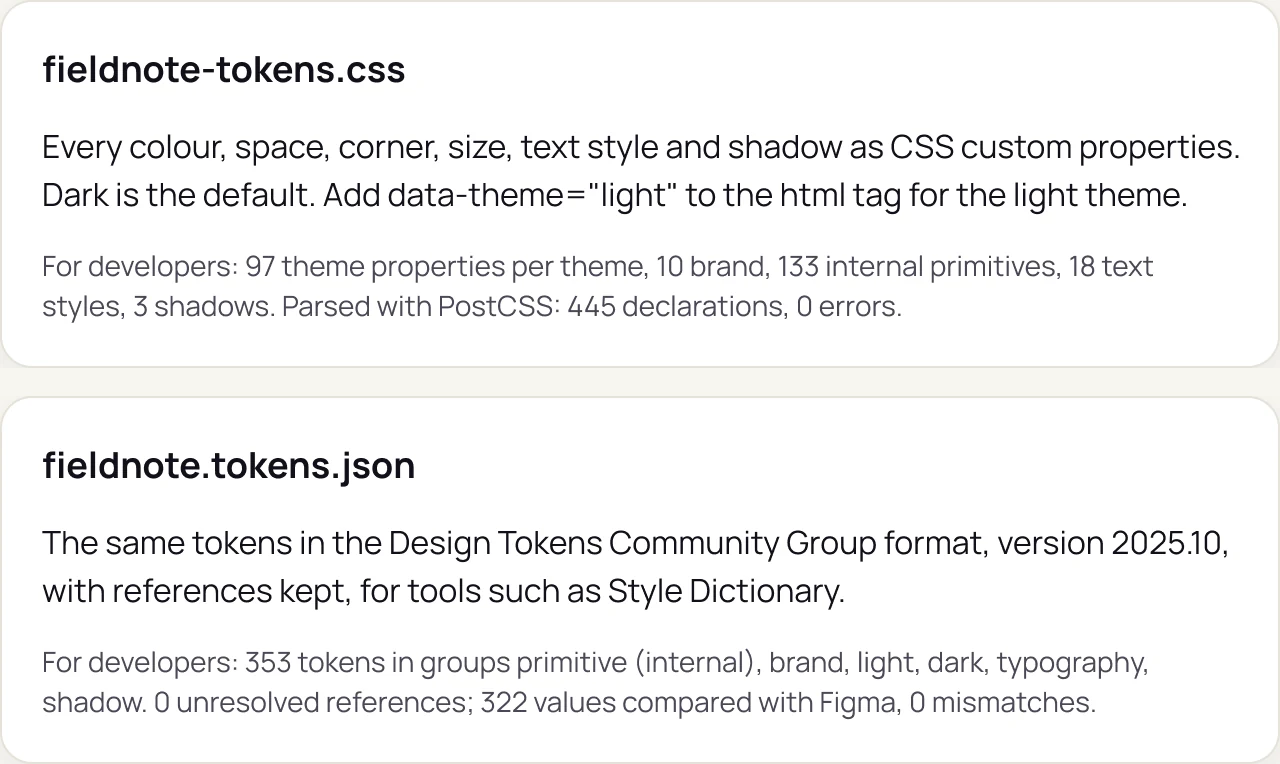
A spec card for every screen, with the states, accessibility, edge cases and data rules. Token files in CSS and JSON, checked against Figma value by value.

  • 353tokens
  • 0mismatches
Handoff page, the files for developers
Two file cards: fieldnote-tokens.css, every colour, space, corner, size, text style and shadow as CSS custom properties; and fieldnote.tokens.json, the same tokens in the Design Tokens Community Group format, with 322 values compared with Figma and 0 mismatches.

A demonstration made by Direkta on a made-up product, not a customer result. The photographs are generated, and the names, prices and dates are sample content.

Judgement, not more screens.

Tools that generate screens give you more screens. Direkta gives you what a Head of Design gives you: what to build, why, what is still wrong, and what nobody has checked yet.

It asks before it guesses.

When a choice is yours to make, about money, rules or what the product does, it stops and asks. Small, reversible calls it makes itself and tells you.

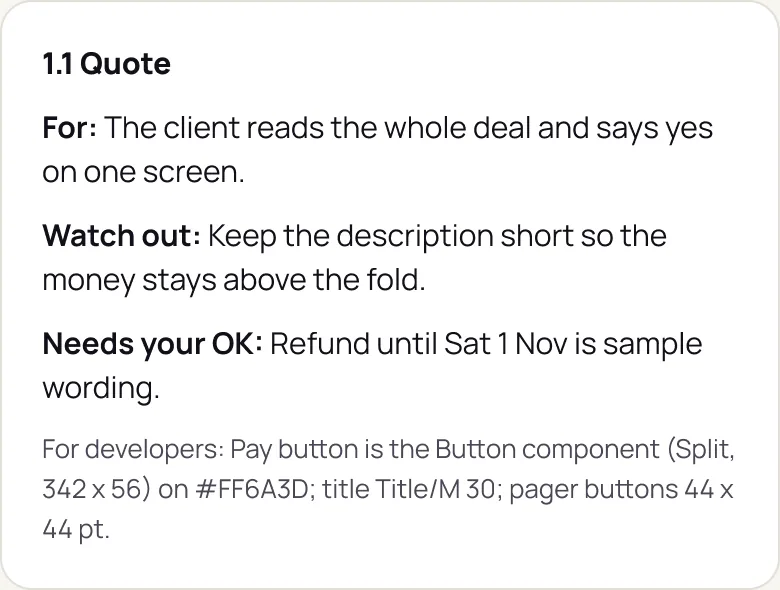
The note under the quote screen: who it is for, what to watch out for, 'Needs your OK: refund until Sat 1 Nov is sample wording', and a line for developers.
The note under the quote screen, with what needs your OK

It explains every decision.

Every screen comes with a short note: what it is for, what to watch out for, and the exact values for developers. Every problem it finds gets a card with the current and the suggested design.

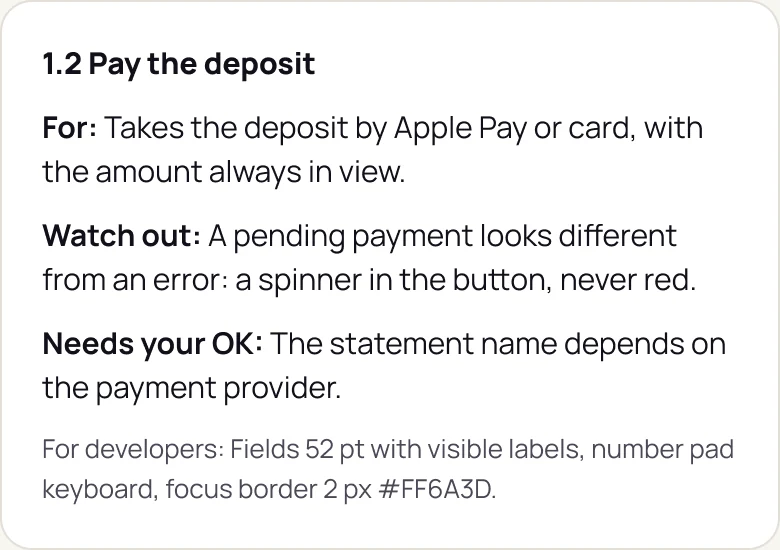
The note under the payment screen: for, takes the deposit by Apple Pay or card with the amount always in view; watch out, a pending payment looks different from an error; needs your OK, the statement name depends on the payment provider; and a line for developers.
The note under the payment screen

It remembers what you decided.

Every decision is logged with what was rejected, who owns it and what would reopen it. The log lives in your file, so the next job starts where the last one ended.

Decision log

  • Look: Darkroom, warm black, real photos, safelight orangeRejected: Studio journal, KeepsakeSettled
  • Main measure: quotes paid within 48 hours, target 60%Rejected: sign-ups, galleries deliveredNeeds your OK. Reopens after the first 10 real quotes
  • Gallery link lives 12 monthsRejected: forever, 30 daysNeeds your OK. Reopens on storage cost
  • Next step: 10 real quotes by link before more screensRejected: going straight to a full buildProposed
Four rows from the decision log on the plan board

It says what it cannot check.

It measures what a design file can show, and lists what still needs a real person or the built product, with who should check it.

What a design file cannot show

  • Whether buttons and fields show focus.Who checks it: a developer, tabbing through the built screens with a keyboard.
  • How the screens sound with VoiceOver, and the reading order.Who checks it: a person who uses a screen reader.
  • Real wait times for paying and loading 25 pictures on a slow phone.Who checks it: a test on a real device and network.
From the audit page. Every audit ends with this list

Every command, on every plan.

Plans differ in seats and in how many of the four largest jobs you can run each month: audits, fixes, designs and design systems.

Yearly: two months free

Solo

For one founder or freelancer with one product.

$39a month

Billed monthly

  • 1 seat
  • 3 audits a month
  • 3 fix runs a month
  • 2 design or redesign runs a month
  • 1 design system a month
  • Every other command unlimited
Choose Solo

Studio

For agencies and studios running several client products.

$299a month

Billed monthly

  • 10 seats
  • 50 audits a month
  • 50 fix runs a month
  • 30 design or redesign runs a month
  • 10 design systems a month
  • Every other command unlimited
Choose Studio

Prices are in US dollars. A seat is one person who signs in with their own email. You also need your own Claude account (Pro or higher recommended) and Figma, billed by Anthropic and Figma. Full refund within 14 days of any payment. Refund policy.

Get started.

You need your own Claude account and Figma. Direkta adds the method, the checks and the memory. Tell us which plan you want, and we aim to reply within one working day.

  1. 1We email you a secure payment link, for card or bank transfer.
  2. 2Add Direkta to Claude. Once it is paid, you get your sign-in invite and a short setup guide.
  3. 3Ask in plain words, for example direkta audit with your Figma link, or a one-line idea for a new product.
  4. 4Review in Figma. Screens and short notes appear beside your originals, and you approve each step.

Some work needs real people: user interviews, moderated tests, testing with assistive technology. Our designers do that too, as a separate service. Ask at info@direktadesign.com.

Questions.

Anything else, email info@direktadesign.com.

What do I need to use Direkta?

Your own Claude account (Pro or higher recommended, because large jobs use a good share of a session), a Figma account with the Figma connector turned on in Claude, and a Direkta plan. Direkta is added to Claude as a connector, and you sign in with your email.

Does my Claude plan cost extra?

Claude and Figma are billed separately by Anthropic and Figma. Direkta runs inside your own Claude, so each job uses part of your Claude allowance. Direkta tells you before each job how large it is.

What counts towards my monthly limits?

Only the four largest jobs: audits (including live websites), fix runs, design and redesign runs, and new design systems. A job counts when it starts, and limits reset on the 1st of each month. If you reach one, everything else keeps working, and you can email us for a few more.

What is a seat?

One person who signs in to Direkta with their own email. Solo has 1 seat, Pro 3 and Studio 10. Everyone on a plan shares its monthly limits.

What is the founding price?

Pro for $69 a month, or $690 a year, for our first 50 customers. The price stays the same for as long as your subscription continues without a break. When the places are taken, the offer closes.

How do I pay?

We email you a secure payment link for card or bank transfer. Monthly plans get an invoice each month, yearly plans once a year. Nothing renews without an invoice you can see first.

Can I cancel or get a refund?

You can cancel at any time by email, and you keep access until the end of the period you paid for. Ask within 14 days of any payment and we refund it in full, with no questions asked.

Does Direkta change my designs or keep them?

It never edits or deletes your original screens: its work is built beside them, after you approve the plan. It keeps a short record of each job for 90 days, such as the command and check results, and never stores your screens or images. See the privacy policy.

How is this different from design agents inside other tools?

Direkta works in the Figma file you already have, with your own components and tokens, and leaves your originals untouched. It gives you a Head of Design's judgement, with the reason for every decision and a list of what it could not check, rather than another way to generate screens.
Start with one flow or one idea.

Every command is included, on every plan.